Venetian, Roller or Roman: Choosing Blinds Room by Room
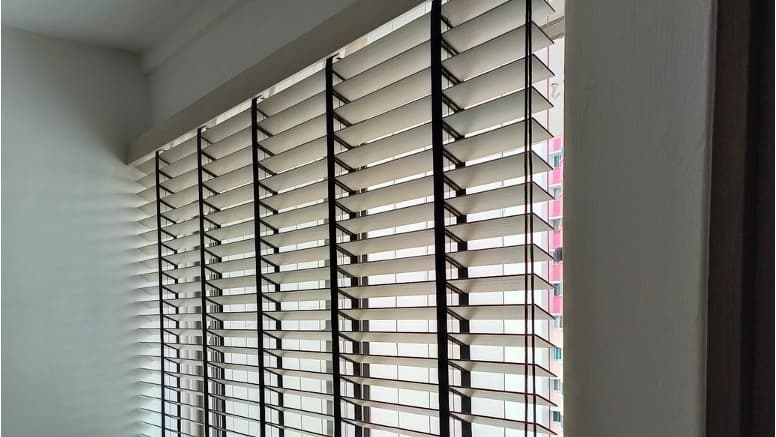
The blind that suits a room depends on what that room must do first: a bright living room needs heat and glare control, a bedroom needs full darkness for rest, and a kitchen or bathroom needs a material that tolerates moisture. For a new home, the sound approach is to choose each blind by the room it serves, rather than fitting a single type across every window.
Four types account for most homes in Singapore: roller blinds, Venetian blinds, Roman blinds, and day and night blinds, also known as zebra or combi blinds. Drape Works supplies the full range of blinds alongside custom curtains, so a home can mix types where each room calls for a different answer.
The main types of blinds for Singapore homes
Before matching a blind to a room, it helps to understand what each of the four common types does well and where each falls short.
Roller blinds
Roller blinds are single sheets of fabric that wind up and down from a tube at the top of the window. They are the most versatile option, available in sunscreen fabric that filters glare while keeping a view, dimout fabric that softens the light, or blackout fabric that removes it almost entirely. Their flat, compact profile sits neatly in narrow HDB window recesses and suits plain, modern interiors.
Venetian blinds
Venetian blinds use horizontal slats that tilt on a cord, so light can be directed upward, downward, or shut out without raising the blind at all. Slats come in aluminium, faux wood, or real timber. When humidity is a concern, aluminium and faux wood resist moisture and warping, which makes them a steadier choice for kitchens and bathrooms than natural wood.
Roman blinds
Roman blinds are fabric panels that gather into soft horizontal folds as they rise. They give a room a warmer, more furnished look than a flat blind, and a blackout or thermal lining can be added where light control matters. Since the fabric stacks in view when the blind is raised, Roman blinds suit living rooms and bedrooms far more than damp or greasy areas.
Day and night blinds
Day and night blinds, also called zebra or combi blinds, layer alternating bands of sheer and solid fabric. Aligning the solid bands blocks the view and most of the light, while sliding them to overlap the sheer bands lets in filtered daylight. That adjustability makes them a flexible middle ground for living rooms and studies, where light needs shift through the day.
Choosing blinds room by room
With the types in mind, the choice becomes simpler once you weigh what each room is for and how much sun it takes. Sun orientation matters in particular, since a west-facing window carries far more afternoon heat and glare than a shaded or north-facing one.
The bright living room
A living room usually holds the largest windows and the most daytime use, so the aim is to cut heat and glare without losing the view or the daylight. Sunscreen roller blinds or day and night blinds manage this well, filtering the sun while keeping the room open. For a west-facing living room that heats up through the afternoon, a denser sunscreen or a dimout fabric gives more relief.
The bedroom
In a bedroom the priority is darkness for sleep, and this matters most for shift workers or east-facing rooms that catch the early sun. Blackout roller blinds, or Roman blinds with a blackout lining, remove almost all of the light. Day and night blinds also work when full darkness is wanted only at night and softer light is welcome during the day.
The kitchen and bathroom
Kitchens and bathrooms deal with steam, splashes, and cooking grease, so the material matters more than the style. Aluminium or faux wood Venetian blinds and PVC roller blinds wipe clean and resist moisture. Instead of fabric blinds or natural timber, which absorb damp and can warp, choose a surface that a damp cloth will clean, and the blind will last far longer in these rooms.
The study or home office
A study benefits from steady, even light that reduces screen glare without darkening the room. Sunscreen roller blinds and day and night blinds let the light be tuned through the working day, and Venetian slats can angle daylight away from a monitor. For rooms used for video calls, a light-filtering fabric gives an even, flattering background.
Planning the whole home at once
Outfitting a new home in one go brings an advantage the room-by-room view can miss: the chance to plan a consistent look and a sensible budget across every window. A practical method is to settle on one fabric family or colour tone, then vary the blind type by room. For example, roller blinds in a shared colour can run through the living and utility areas, with Roman blinds reserved for the bedrooms where a softer finish is wanted.
Mapping every room's needs before ordering also lets a supplier measure and install the whole home together, which keeps the finish uniform and avoids piecemeal visits. For how the numbers add up across an HDB or condo, our pricing and quotation FAQ sets out how each window is itemised on a single quote.
Matching materials to Singapore's heat and humidity
Singapore's climate narrows the material choice more than the style does. In damp or wet rooms, aluminium and PVC shed moisture and will not warp, whereas real timber can swell and distort over time. On sun-facing windows, a solar-reflective or blackout backing cuts the heat that comes through the glass, and washable or mould-resistant fabrics hold up better in the humidity. In fact, choosing the material for the room first, then the look, is the surest way to avoid replacing a blind that was never suited to the space.
Controlling light and privacy
Most blind fabrics fall into a few light grades, and the right one depends on how much light and privacy a room needs. Sunscreen fabric filters glare and heat while keeping an outward view and daytime privacy. Dimout fabric blocks most of the light without full darkness, while blackout fabric removes light almost completely for bedrooms and media rooms. Day and night blinds cover a range within a single blind by shifting their sheer and solid bands.
Manual or motorised operation
Most blinds can be operated by a manual chain or by a motor. A manual blind is simpler and costs less, and it suits any window within easy reach. A motor earns its place on tall, wide, or hard-to-reach windows, and on a set of blinds that a household prefers to raise together, since a remote or timer controls them without a chain. For a new home, it is worth deciding this window by window rather than for the whole house at once.
Measuring and installation
Accurate measurement decides whether a blind sits cleanly or lets light leak at the edges. Blinds can be mounted inside the window recess for a neat, built-in look, or outside it to cover the frame and block more light. Because a few millimetres change the fit, a professional measure is the safer route, and more so across a whole home. Drape Works measures on site during a complimentary consultation and typically installs within two to three weeks of a confirmed order, with its own team handling measurement, fabrication, and fitting rather than outside trades.
Blinds or curtains for each room
Blinds and curtains solve different problems, and many homes use both. Blinds give precise, compact light control and a clean line at the window, which suits kitchens, studies, and smaller rooms. Curtains add softness, insulation, and a fuller blackout at night, which many owners prefer in bedrooms and living rooms. Pairing a day blind with a night curtain on the same window is a common way to answer both daytime glare and night-time privacy.
Key Takeaways
- Choose each blind by the room it serves, matching light, heat, humidity, and privacy needs rather than fitting one type throughout.
- Roller, Venetian, Roman, and day and night blinds cover most Singapore homes, each with a distinct strength.
- Bright and west-facing living rooms suit sunscreen roller or day and night blinds that cut glare while keeping the view.
- Bedrooms suit blackout roller blinds or lined Roman blinds for full darkness.
- Kitchens and bathrooms need moisture-resistant aluminium, faux wood, or PVC rather than fabric or natural timber.
- Motorised operation earns its place on tall, wide, or hard-to-reach windows, while manual suits windows within easy reach.
- A professional on-site measure keeps the fit clean across a whole home.
How this guide was put together
The fabric grades, slat materials, and mounting methods described here are the ones Drape Works imports, specifies, and installs in Singapore homes. Material behaviour in humidity, and the two to three week lead time from confirmed order to installation, reflect our own installation record rather than a third-party estimate. Where a room-by-room recommendation is given, it comes from what our team measures and fits on site.
Plan your new home's blinds with Drape Works
A no-obligation on-site consultation, every window measured, and a single fixed quote where what is quoted is what you pay. Fabric and hardware are imported directly and fitted by an in-house team, so the price reflects the work rather than showroom overhead.
Request a free consultation