How to Clean and Maintain Your Curtains
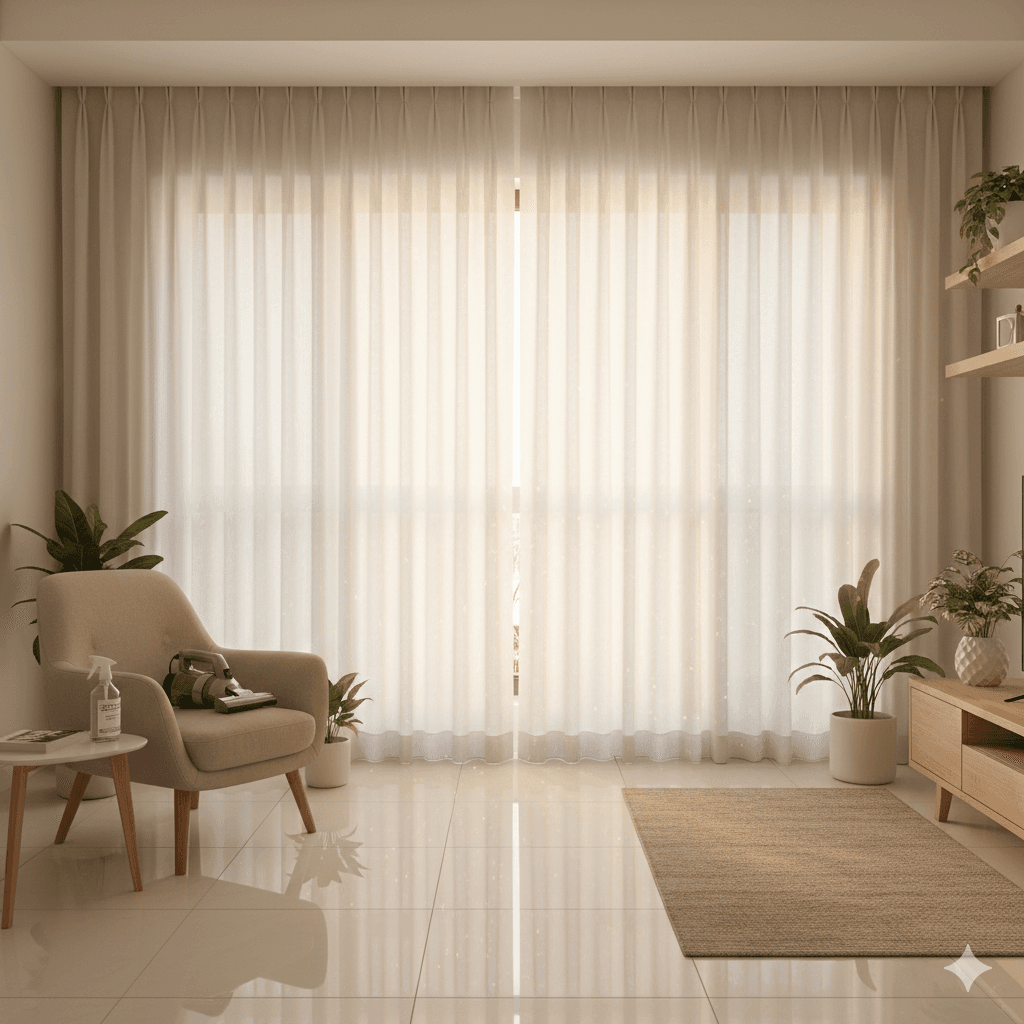
Curtains are significant investments that can last many years with proper care, but Singapore's tropical climate – with high humidity, dust, and intense sun – poses unique maintenance challenges. Regular cleaning and maintenance not only keep your curtains looking fresh but also extend their lifespan, protect your health by reducing dust and allergens, and maintain their functional properties like light-blocking or thermal insulation. Here's everything you need to know about curtain care in Singapore.
Regular Maintenance Schedule
Prevention is always easier than cure. Establish a regular maintenance routine starting with weekly dusting or vacuuming. Use your vacuum's upholstery attachment with low suction to remove surface dust from both sides of your curtains. Work from top to bottom in smooth, downward strokes to avoid pulling the fabric or dislodging the curtain from its track. This simple weekly habit prevents dust buildup that leads to discolouration and reduces airborne allergens in your home.
Monthly, give your curtains a more thorough inspection. Check for stains, water marks (especially near air conditioning units), or mould spots. Address these immediately – stains become permanent if left too long, and mould spreads quickly in Singapore's humid environment. Shake out your curtains outdoors if possible to dislodge embedded dust and freshen them up. This is also a good time to check curtain hooks, tracks, and hardware for any issues that might damage the fabric.
Deep cleaning frequency depends on several factors: room function, exposure to smoke or cooking odours, presence of pets, and personal sensitivity to dust. As a general rule, curtains should be professionally cleaned or washed every 6-12 months. Living room and bedroom curtains can often go 6-12 months, while kitchen curtains or those in homes with smokers or pets may need cleaning every 4-6 months. If you notice your curtains appearing dingy, smelling musty, or triggering allergies, don't wait for the scheduled cleaning.
Cleaning Methods by Fabric Type
Different curtain fabrics require different cleaning approaches. Polyester and synthetic blends, the most common choice in Singapore, are generally machine-washable, but always check the care label first. Wash in cold water on a gentle cycle with mild detergent, and avoid fabric softeners which can damage water-resistant or blackout coatings. Don't overcrowd the washing machine – curtains need space to agitate properly. Hang immediately after washing while still damp to prevent wrinkles, and allow to air dry fully before rehanging.
Cotton and linen curtains are trickier. While some are machine-washable, many will shrink (up to 3-5%) even in cold water. If your cotton curtains are custom-made to exact measurements, shrinkage could mean they no longer fit properly. Pre-shrunk cotton curtains can usually be washed safely at home, but for unsure cases, professional cleaning is safer. If you do wash cotton or linen, expect some wrinkling – you may need to iron them while still slightly damp, using appropriate heat settings.
Silk, velvet, and other delicate fabrics should always be professionally dry cleaned. These materials can be permanently damaged by water, harsh detergents, or wrong handling. The investment in professional cleaning is worth it to protect your expensive curtains. Never attempt to spot-clean silk or velvet at home with water – it often creates water rings that are impossible to remove. For emergency spills, blot immediately with a clean, dry cloth and take to professional cleaners as soon as possible.
Singapore-Specific Cleaning Challenges
High humidity is Singapore's biggest curtain enemy. Even in air-conditioned homes, humidity levels can spike during rainy periods or in less-used rooms, creating ideal conditions for mould and mildew. If you notice musty smells or dark spots on your curtains, act immediately. For washable curtains, wash with a cup of white vinegar added to the rinse cycle – vinegar helps kill many common mould species and neutralises odours without harsh chemicals. For non-washable curtains, professional cleaning with anti-fungal treatment is necessary.
Dust accumulation is more severe in Singapore than in temperate climates, partly due to constant construction activity island-wide and partly because windows are open more frequently for ventilation. Coastal homes face additional challenges from salt spray that can leave residue on curtains facing the sea. Regular vacuuming is crucial, but consider air purifiers in bedrooms and living areas to reduce overall dust levels, which will also reduce dust settling on curtains.
Singapore's intense UV radiation fades curtains faster than in countries with less sun exposure. While you can't prevent sun damage entirely, you can slow it by choosing fade-resistant fabrics, keeping the sun-facing side of your curtains treated with UV-protectant spray (available from home improvement stores and online retailers), and rotating curtain panels periodically if you have spares. For expensive curtains, consider using sheer curtains as a first layer to take the brunt of UV damage, protecting your decorative curtains behind them.
Professional Cleaning Recommendations
Not all professional curtain cleaning services are equal. Look for companies that specialise in curtain cleaning rather than general laundry services – they'll have appropriate equipment and experience with different fabric types. Reputable services offer pickup, cleaning, and rehang services, typically costing $15-50 per panel depending on size, fabric, and curtain type (simple day curtains versus heavy lined blackouts).
Ask about their cleaning process. The best services use gentle, fabric-specific methods and conduct pre-cleaning inspection to identify and treat stains. They should also check for structural issues like weakened seams or damaged lining that might worsen during cleaning. After cleaning, curtains should be returned pressed and ready to hang. Some companies offer anti-bacterial or anti-mould treatment for an additional fee, which is worthwhile in Singapore's climate, especially for homes with allergy sufferers or respiratory issues.
DIY Stain Treatment Tips
For common stains on washable curtains, quick action is key. Water-based stains (tea, coffee, juice) respond to cold water blotting followed by gentle cleaning with diluted laundry detergent. Work from the outside of the stain toward the centre to avoid spreading. Rinse thoroughly with cold water. For oil-based stains (food grease, makeup), dust with cornstarch or talcum powder to absorb the oil, let sit for 30 minutes, brush off, then treat with a small amount of dish soap before washing.
Mould spots on washable fabrics can be treated with a paste of baking soda and water – apply, let sit for an hour, then brush off and wash. For stubborn mould, white vinegar solution (1 part vinegar to 1 part water) can be sprayed on the affected area, left for 30 minutes, then washed. However, if mould has penetrated deep into the fabric or if the curtains are valuable, professional cleaning with anti-fungal treatment is more effective and safer.
Prevention remains the best strategy: address spills immediately, ensure good ventilation to prevent moisture buildup, and keep curtains away from cooking areas where grease and odours accumulate. With consistent care and appropriate cleaning methods for your fabric type, your curtains will stay fresh, clean, and functional for many years in Singapore's challenging climate.
Related Posts
Need Help Choosing?
Our expert team is ready to help you find the perfect curtains or blinds for your Singapore home. Get a free consultation and quote today.
Get a Free Quote