Complete Guide to Blackout Curtains in Singapore
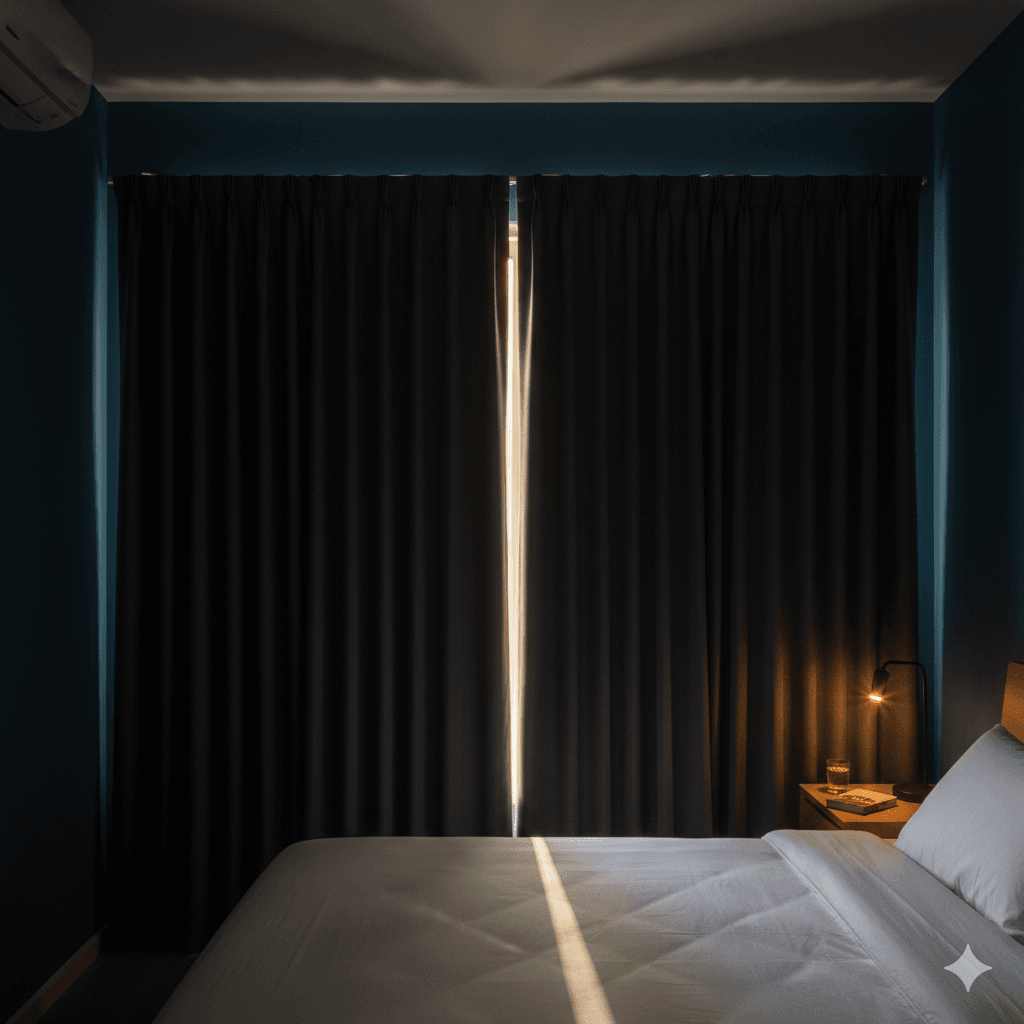
In a country where the sun rises as early as 6:46am and sets as late as 7:22pm, blackout curtains aren't just a luxury – they're often a necessity for quality sleep and comfortable living. Whether you're a shift worker needing daytime sleep, a parent of young children trying to maintain nap schedules, or simply someone who values a cool, dark bedroom, understanding blackout curtains is essential for Singapore homeowners.
Why Blackout Curtains Are Essential in Singapore
Singapore's location near the equator means intense sunlight year-round, with UV index that can reach 11-12 (extreme category) during peak midday hours. This relentless sun doesn't just disrupt sleep – it heats up rooms significantly, forcing air conditioners to work harder and driving up electricity bills. Quality blackout curtains can block 95-100% of external light while also providing thermal insulation, reducing heat transfer through windows by up to 25%. This dual benefit makes them one of the most practical home investments in tropical Singapore.
Beyond the practical benefits, blackout curtains are crucial for specific situations common in Singapore. East-facing bedrooms receive intense morning sun that can make sleeping past 7am nearly impossible without proper window treatment. Homes facing streetlights or 24-hour coffee shops benefit from the light-blocking properties at night. Parents of young children find that blackout curtains help maintain consistent sleep schedules despite Singapore's relatively small seasonal variation in daylight hours.
Understanding Blackout Fabric Options
Not all blackout curtains are created equal, and understanding the fabric technology helps you make the right choice. The most common type uses triple-weave construction, where three layers of fabric are woven together with the middle layer typically being black or dark-colored to absorb light. This construction creates a thick, heavy curtain with excellent light-blocking properties and good thermal insulation. Triple-weave blackout curtains are available in various colors on the exterior-facing side, so you're not limited to dark colours in your room.
Coated blackout curtains use a different approach – a thin layer of acrylic or foam backing applied to regular curtain fabric. This method is more affordable and lighter in weight, making it easier to open and close. Coated curtains can achieve excellent light blocking (typically 98-100%), often outperforming triple-weave (which typically blocks 80-95%). However, the coating can deteriorate over time, especially in Singapore's humidity. Some people also find the backing less aesthetically pleasing if visible from the sides or when curtains move.
A newer option is the blackout lining system, where you attach a separate blackout liner to your decorative curtains using hooks or Velcro. This approach offers maximum flexibility – you can use any curtain fabric you love while still achieving blackout functionality. It's also practical for renters or those who might relocate, as the blackout liner can be transferred to new curtains. The downside is the additional cost and slightly more complex installation and maintenance.
Installation Tips for Maximum Effectiveness
Even the best blackout curtains won't work properly if poorly installed. Light leakage is the most common complaint, and it usually stems from installation issues rather than fabric quality. To achieve true blackout conditions, your curtain track or rod must extend at least 15-20cm beyond the window frame on each side. This overlap ensures that when curtains are closed, they cover the entire window plus the surrounding wall, preventing light from sneaking in around the edges.
For top-mounted tracks, position them as close to the ceiling as practically possible. This minimises light gaps above the curtain. If you're using a curtain rod, ensure it's at least 10-15cm above the window frame. The curtain length should extend to just 1-2cm above the floor to prevent light leaks at the bottom while avoiding fabric dragging on the floor, which accelerates wear and accumulates dust.
Consider the return or wrap-around technique for maximum light blocking. This involves mounting the curtain track with returns at each end, allowing the curtain to wrap around the side wall and create a complete seal. While more expensive and requiring more wall space, this method is ideal for shift workers or anyone requiring complete darkness. Alternatively, use Velcro strips or magnetic tape along the sides of your curtains to attach them to the wall, creating a seal that blocks peripheral light leakage.
Pricing Guide for Singapore Market
Understanding the pricing landscape helps you budget appropriately and avoid overpaying. For ready-made blackout curtains from mass-market retailers like IKEA or Taobao, expect to pay $30-120 per panel for standard sizes (typically 145cm width x 250cm height). These are suitable for standard HDB windows and offer decent light-blocking at entry-level prices, though fabric quality and durability may be limited.
Custom-made blackout curtains from local curtain specialists typically cost $270-650 per window for a typical HDB bedroom window (2m wide x 2.5m high), including fabric, making, and installation. Coated fabrics sit at the lower end of this range, while premium triple-weave fabrics command higher prices.
Premium imported fabrics with special features (anti-bacterial treatment, fire-retardant certification, designer prints) can push costs significantly higher. While expensive, these may be worthwhile for large living room windows that serve as focal points, or for families with specific needs like children with dust allergies. Many suppliers offer package discounts for whole-home installations, potentially saving 10-20% compared to single-window pricing.
Child Safety Considerations
Child safety around window coverings is a serious concern that's often overlooked. Traditional curtain systems with dangling cords pose strangulation risks for young children – globally, hundreds of incidents have been documented involving children and window cord hazards. If you have young children or plan to, prioritise cordless systems or those with inaccessible cord mechanisms.
If budget constraints mean you're using corded systems, ensure cords are secured with cleats mounted high on the wall, well out of children's reach (at least 1.5m above the floor). Use cord tensioners or breakaway tassels that separate under pressure. Never place cribs, beds, or climbable furniture near window cords. When planning your window area, consider overall safety holistically – ensure windows, curtains, and blinds are all set up with child safety in mind.
Maintenance and Longevity
Proper maintenance extends the life of your blackout curtains significantly. In Singapore's dusty environment, vacuum your curtains monthly using the upholstery attachment to prevent dust buildup, which can trigger allergies and make the fabric appear dingy. Most blackout curtains shouldn't be machine washed as the coating can crack or the heavy fabric can damage your machine. Professional dry cleaning every 6-12 months is recommended, though some modern polyester blackout curtains are washable – always check the manufacturer's care label.
Watch for signs that your blackout curtains need replacement: light showing through the fabric when they shouldn't, coating peeling or flaking, fabric fading significantly on the sun-facing side, or musty odours that don't disappear after cleaning. Quality blackout curtains should last 5-8 years in Singapore's climate with proper care, making them a worthwhile investment in your sleep quality and home comfort.
Related Posts
Need Help Choosing?
Our expert team is ready to help you find the perfect curtains or blinds for your Singapore home. Get a free consultation and quote today.
Get a Free Quote